
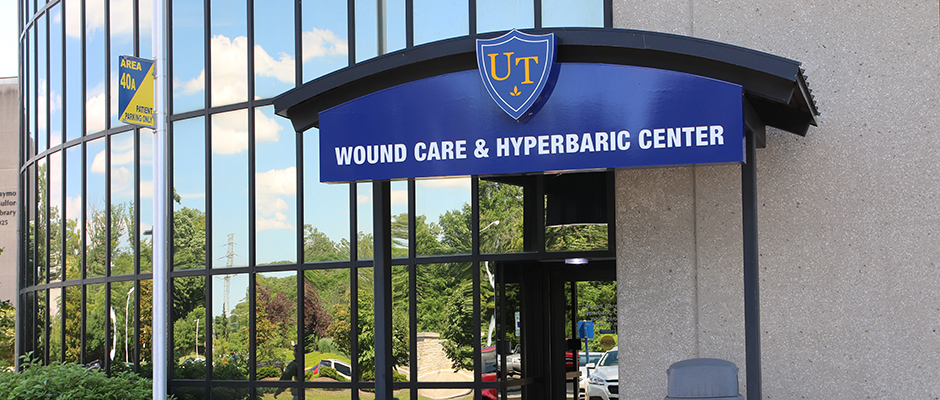
Comprehensive Wound Care
Chronic or non-healing wounds can impact your daily life, reduce your mobility and may lead to serious complications if left untreated.
UToledo Health takes a comprehensive approach to managing chronic wounds — working not only heal the wound itself, but also to address the underlying conditions that contribute to poor healing.
Our multidisciplinary team includes vascular surgeons with expertise in treating chronic wounds, working alongside plastic and orthopaedic surgeons, infectious disease specialists, rheumatologists, physical therapists and other healthcare providers.
To schedule an appointment, call 419.383.3812.
Why Choose UToledo Health
The University of Toledo Medical Center’s Wound and Hyperbaric Center includes wound certified physicians, nurses and other healthcare professionals, all specially certified in the management of wound care and hyperbaric oxygen therapy.
We specialize in the care of a wide range of chronic wounds, providing both inpatient and outpatient care.
UTMC is proud to offer Toledo’s only multiplace hyperbaric oxygen chamber and was one of the first healthcare systems in the country to treat chronic wounds using 3D printed grafts derived from a patient’s own fat cells.
Our multidisciplinary team also specializes in limb salvage and amputation prevention, combining minimally invasive and open procedures to restore blood flow to the legs and feet with hyperbaric oxygen therapy and coordinated care from specialists in foot and ankle surgery, endocrinology, infectious disease, physiotherapy and general surgery. This comprehensive approach helps patients with chronic limb-threatening ischemia and other advanced vascular diseases heal wounds, preserve mobility and avoid amputation whenever possible.
What We Treat
Most minor wounds heal on their own within a few weeks. However, if healing is slow, stops or the wound gets worse, a specialized evaluation from a wound care expert can help.
Typically, a wound that does not respond to standard treatment or show signs of healing within 30 days is considered chronic.
There are many types of chronic wounds. Some of the most common forms include:
- Diabetic foot ulcers
- Arterial ulcers
- Non-healing surgical wounds
- Venous stasis ulcers
- Pressure ulcers
- Chronic osteomyelitis
- Radiation-related tissue damage
Underlying Conditions that Contribute to Chronic Wounds
Non-healing wounds are often the result of underlying conditions that affect circulation, limit mobility or disrupt the body’s natural healing processes.
Diseases and conditions that can increase the risk of chronic wounds include:
- Diabetes
- Arterial disease
- Venous insufficiency
- Obesity
- Immobility
- Poor nutrition
- Cancer and radiation treatments
- Autoimmune diseases such as rheumatoid arthritis and lupus
Assessment and Treatment
Patients experiencing a chronic, non-healing wound are often referred for non-invasive vascular testing to determine if underlying circulatory problems may be contributing to poor healing.
At UToledo Health, vascular testing is performed by registered vascular technologists in conjunction with board-certified vascular surgeons. Our vascular laboratory is accredited by the Intersocietal Accreditation Commission (IAC).
Additional evaluations may include nutritional assessments, blood tests, advanced imaging, wound cultures, and transcutaneous oxygen measurements, which help determine how well oxygen is reaching the skin and surrounding tissue.
Depending on the underlying cause, treatment may include hyperbaric oxygen therapy, negative pressure wound therapy, compression therapy, minimally invasive vascular procedures, surgical intervention or advanced skin grafting techniques.
If you have a wound that isn’t healing as expected, our team can help determine the cause and develop a personalized treatment plan.
To schedule an appointment, call 419.383.3812.